
- Key Takeaways
- Cooling Systems Explained
- Common Failure Signs
- Used Radiators Edmonton Checklist
- Fitment Verification Steps
- OEM Versus Aftermarket Value
- Winter Climate Stress Factors
- Conclusion
- Frequently Asked Questions
- How do I know if a used radiator in Edmonton is still in good condition?
- What should I check before buying a used radiator in Edmonton’s cold climate?
- How do I verify a used radiator will fit my vehicle?
- Are OEM used radiators better than aftermarket ones?
- What are common signs that my current radiator is failing?
- How does Edmonton’s winter affect radiator performance?
- Is buying a used radiator in Edmonton cost-effective?
Key Takeaways
- A healthy cooling system needs radiators, hoses, fans, reservoirs, and quality coolant all pulling heat away from your engine block and keeping it at a safe temperature. Periodic inspections of coolant level, hue, and visible parts maintain system efficiency.
- These early warning signs — temperature spikes, dashboard warning lights, leaks, or unusual smells — shouldn’t be ignored because they can rapidly result in expensive engine damage. Regular visual inspections and close attention to the temperature gauge aid early detection.
- Coolant color shifts or visible corrosion or residue around the radiator all indicate contamination or wear that decreases heat transfer efficiency and raises leak risks. Flushing the system, replacing heavily corroded units, and deterring parts from winter road salts are practical maintenance steps.
- Visually and functionally inspect the core, tank seams, port threads, tranny cooler fittings and mounting points when shopping for used radiators in Edmonton. Bringing out simple tools, pressure testing when we can and turning down patched or structurally compromised units reduce the risk of failure.
- Our fitment verification process ensures you receive the correct part, helping you avoid installation headaches by matching VIN data, core dimensions, inlet and outlet placement, and connection types with original specifications. We use part numbers, dimensions, and an easy comparison chart to help locate a used radiator that fits right the first time.
- OEM versus aftermarket a good used OEM radiator has the advantage of guaranteed fitment and known performance at a lower cost, particularly when extended warranties and detailed part history are available. Here in Edmonton, pairing the right radiator with quality antifreeze and regular winter check-ups keeps the engine safe from freeze damage.
Used radiators Edmonton are car or truck radiators that have been stripped out of older or damaged cars and sold on for reuse at a reduced cost. As numerous drivers and small repair shops around the city know, used radiators are a way to save some money while still keeping cars in safe, working condition. Local auto recyclers and salvage yards commonly check and wash these components, and a few provide brief guarantees or returns. Edmonton buyers typically weigh core status, leak history, and fit with their vehicle model before they cough up. To assist in sifting through options, the upcoming sections cover where to find used radiators, what to inspect prior to buying, and how to balance cost against long-term value.
Cooling Systems Explained
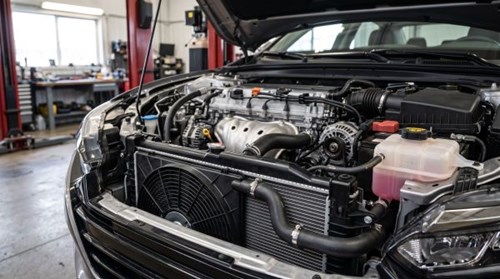

The cooling system maintains engine temperature in a safe range so metal components don’t warp, seize, or crack. Even in chilly locales, a revving engine churns out more heat than it can manage alone, so each component in the system has a defined role and must operate in unison.
Radiators, fans, hoses and the reservoir transfer heat from the engine to the air. Coolant is trickled from the engine block into the radiator, where thin tubes and fins disperse the heat. Older cars and most vintage trucks had downflow radiators, in which the coolant flowed from the top tank to the bottom tank. From the mid-60s, most manufacturers switched to crossflow radiators, which run side to side and frequently cool more effectively in cramped engine compartments. By the mid-1980s, copper and brass cores were getting more difficult to obtain, so a lot of manufacturers transitioned to aluminum radiators that are both lighter and less expensive to produce. Fans blow or suck air through the fins, hoses transport coolant back and forth from the engine and radiator, and the reservoir provides additional volume as coolant expands and contracts. A well-used radiator in Edmonton, or anywhere else, still requires good hoses, a tight reservoir, and a working fan to do its job.
Coolant is the fluid that absorbs the heat from the engine block and cylinder head. It prevents rust and freezing if you utilize the proper type and mix. A 160-degree thermostat begins to open at about 57 to 60 degrees Celsius and is fully open at about 71 degrees Celsius, which determines the lower limit of engine temperature. IAT coolant typically lasts 2 to 3 years until it loses freeze protection and begins to attack rubber hoses and seals. HOAT coolant has a firm 5-year lifespan and can substitute for either primary type for that entire period. Shops will recommend a coolant flush every 25,000 miles to remove sludge and maintain a steady heat transfer.
Some of the key parts are the radiator, water pump, thermostat, cooling fan, heater core, hoses, clamps, reservoir, and radiator cap. The pump circulates coolant, the heater core brings heat to the cabin, and the cap maintains pressure, which increases the boiling point. Typical cap ratings are around 103 kPa for closed systems and 48 to 103 kPa for open ones. That pressure margin is a key reason modern engines can run hot without boiling over. If overheating has already caused damage beyond the radiator, checking available engines and engine parts can help you compare replacement options before committing to a major repair.
Common Failure Signs
Cooling issues with a secondhand radiator typically begin minor, then expand quickly. Identifying those warning signs early helps keep repair costs from escalating and prevents potential engine damage, particularly in a city like Edmonton with its cold winters and constant stop and go traffic.
Temperature Spikes
A rapid increase in the vehicle’s operating temperature is one of the most obvious indications that something is amiss in the cooling or heating system. If the dashboard gauge creeps higher than usual or oscillates up and down, that can be indicative of a weak radiator, low coolant level, or a thermostat that’s stuck and no longer communicates with the radiator when to open and close. In other cars, the heater will blow cold air while the gauge indicates the engine is hot, potentially indicating a bad heater core or pockets of air in the system.
If the gauge goes into the red or a warning light illuminates, stop at the earliest safe opportunity. Warning lights can sometimes involve more than the cooling system itself, so if electrical faults are also present, inspecting related vehicle electrical parts may be worthwhile before replacing the radiator alone. Allow the engine to cool before opening the hood. Pushing through repeated overheating can warp the cylinder head, ruin gaskets, and transform an easy radiator swap into an entire engine repair. After a surge, inspect for steam from beneath the hood, the odor of scalding coolant, or puddles beneath the front of the vehicle that could indicate radiator or heater hose leakage.
When the heater doesn’t warm after a few minutes of driving, that’s another red flag. It could be due to a seized thermostat, insufficient coolant, vacuum leaks that prevent the heater valve from opening, or even fan or blower motor failure. Keeping an eye on the gauge and heater performance during cold starts is an easy way to spot trouble with a used radiator before it gets ugly.
Coolant Discoloration
Coolant discoloration is an early hint the radiator or parts are beginning to give. During oil changes or seasonal checks, look into the reservoir. Normal coolant is usually clear green, orange, pink, or blue, depending on type. If it appears brown, rusty, milky, or particle-laden, it can coat the inside of a recycled radiator and reduce heat transfer, which boosts operating temperatures and stresses the heater core.
- Check coolant color and level at a minimum of every 3 to 6 months.
- Refill only with the appropriate coolant, not water.
- Book a radiator flush if it looks rusty or cloudy in color.
- Have a mechanic check for oil in the coolant, which can indicate internal engine problems.
- For repeated discoloration that returns after flushing, replace the radiator, heater core, or hoses.
Exterior Corrosion
For used radiators in Edmonton, external corrosion is normal as winter road salts and moisture attack the thin metal fins and seams. Over time, this rust eats through the housing and joints, causing slow leaks that often manifest as a small drip or white, chalky stains on your radiator face. Even if the radiator is not leaking yet, heavy corrosion decreases airflow and cooling capability, which can push the gauge higher under load or on long climbs.
- Chipping paint or rust spots on the radiator tanks or seams.
- White or green crust appears where coolant has evaporated around joints or hose connections.
- Bent or crumbling fins that snap off with gentle finger pressure.
- Rust on mounting brackets and adjacent metal components typically worsens following winter.
- Preventative actions include rinsing road salt from the engine bay when possible, fixing leaky hoses quickly, and avoiding ignoring small wet spots under the front of the car.
If a radiator is severely corroded, replacement is typically cheaper than patch repairs, particularly for a used older unit. Replacing with a fresh aluminum radiator reduces the likelihood of sudden failure and safeguards the engine against chronic overheating down the road.
Used Radiators Edmonton Checklist
Used radiators Edmonton saves money and they require a rigorous, consistent inspection routine. Your Used Radiators Edmonton Checklist ensures less risk of engine overheating, leaks, and bad fitment.
- Verify part compatibility with your vehicle’s make, model, engine size, and transmission.
- Check for dents, corrosion, or extensive wear on all exposed surfaces.
- Check functional items: core pressure, cap function, and cooler circuits.
- Use rudimentary tools on site, such as a flashlight, small mirror, rags, a simple pressure tester if permitted, a tape measure, and a phone camera.
- Photograph each radiator and jot down brief notes so you can compare units afterward instead of trying to recall from memory.
- Remember, a used radiator in good shape can perform admirably in the long haul as long as you flush the cooling system every 50,000 km or according to the manufacturer’s schedule.
Concentrate on the fins initially. Bent or crushed fins block airflow and can cause intermittent overheating, particularly at low speeds. Lightly bent fins are typical on used components, but large crushed zones, impassable dirt or insects usually indicate poor cooling.
Shine a flashlight down the tubes and between fins. Brown sludge, white scale or thick rust signals old neglect or missed coolant changes. Many drivers don’t flush at 50,000 km, so internal build-up is prevalent and difficult to repair. Inspect the core faces for green, white or rusty streaks. These often indicate old leaks.
If the seller permits, conduct a basic pressure test. Even a low-pressure check will reveal pin holes or hairline cracks. Never take a core that has epoxy blobs, solder patches, or welded “fixes” along the fin area. These fixes tend to break again as the radiator heats and cools repeatedly.
Tank seams are common leak areas. Inspect for dry coolant trails, staining, or crust at the seam where the plastic or metal tank joins the core. Run your finger along the entire seam. Soft, oily, or flaking spots are indicative of a previous leak or impending seam failure.
Plastic tanks are even and tight, not spread or bent back. Gaps and bulges are present on metal tanks. Any indication of a separated or swollen seam is an immediate reject, even if the remainder of the radiator appears clean.
Threads at inlet and outlet count for sealing as well. Inspect every port for cross-threading, flat spots, or missing material. Cracks around the base of the port can spread once you tighten hoses. If the threads are simply filthy, wipe them so you can see the actual state.
Test-fit a hose or fitting if you can to sense a consistent, tight bite. A port that allows the hose clamp to slide or that is loose can create slow, hard-to-track leaks that cause some owners to blame the thermostat or water pump instead of the radiator.
A lot of Edmonton buyers want radiators with built-in transmission coolers. First, determine if your car requires an integrated or stand-alone cooler, especially if you are also dealing with transmissions or transmission-related cooling concerns. Then check the cooler fittings; they should be straight, not crushed, and free of thread damage. Missing fittings contribute to expense and sometimes delay the fix.
Peek inside the cooler ports for metal flakes or dark sludge. That can mean a dying transmission was previously attached to this radiator, and those impurities could leak into your own. If you’re not confident the cooler circuit is clean and leak-free, it’s safer to pass on to another unit.
Mounting points determine if the radiator truly fits the car without strain. Match every tab and bracket to your original radiator or to factory diagrams. Measure distances between mounts in millimetres to ensure the support points match up with your car's frame and shrouds.
Look for cracks near bolt holes, ripped rubber bushings or bent metal ears. Even little bends can twist the core once installed and that can open up slow leaks at the seams down the road. Turn down radiators with broken or badly bent brackets as ‘making it fit’ often results in vibration, noise, and premature failure.
Fitment Verification Steps
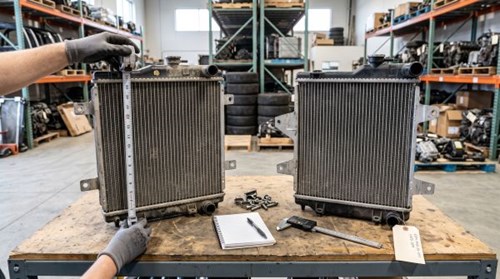

Fitment verification steps reduce the chance of purchasing a used radiator in Edmonton that will not seal well or bolt in. It is important to align the used unit with your vehicle's make, model, year, and cooling layout prior to money or time being invested.
- Confirm make, model, year, engine size, and trim level
- Match core dimensions: height, width, thickness (in mm)
- Match overall dimensions, including tanks, brackets, and mounts
- Check inlet and outlet tube size, angle, and location
- Confirm transmission oil cooler ports and engine oil cooler ports.
- Use OEM or manufacturer part number as a baseline
- Compare seller specs against vehicle manual or manufacturer site
- Build a simple comparison table of all key specs
- Test fit when possible before final payment
Use the entire VIN as your initial filter, not the final one. A lot of Edmonton recyclers, online catalogs and dealer systems can read that VIN and reveal the exact radiator family made for that car, with engine code, transmission type, and any heavy-duty cooling package. Cross-reference that VIN in the seller’s database and have them verify the part is marked VIN-matched, not ‘should fit most.’ This step eliminates the guesswork that can result from model mid-year changes or regional variants.
Back this up by verifying your vehicle owner’s manual or the manufacturer’s website for the OE part number. Reference that number to the used radiator’s tag or casting label and to online parts catalogs. Some owners verify automotive forums if other drivers with the same VIN range had to utilize a different radiator or adapter, which comes in handy when there were factory revisions. Verifying VIN fitment first prevents any expensive returns, bent brackets, or coolant leaks from making a ‘close enough’ core fit.
List all needed measurements before shopping: core height, core width, and core thickness in millimeters, plus overall height and width including tanks and side brackets. Simply measure your current radiator on a flat surface after removal and check fan shroud mounts and lower pegs or pins.
Cross-reference these measurements with the seller’s data sheet or images. If numbers are absent, have the seller measure and forward them. Lots of Edmonton yards will if they know you’re calling to check fitment. Join some buyers to construct a little table of three columns—“OEM spec,” “Vehicle measurement,” and “Use radiator” to visualize mismatches at a glance. Dismiss any radiator with core or overall dimensions that vary more than a few millimeters, as it can put stress on hoses, mounts, or the fan shroud.
For certain vehicles, a professional mechanic can assist in reading OEM repair information and identifying dimension variations between trim levels. When in doubt, a quick paid inspection often beats buying the wrong part and double paying for coolant and labor.
Inlet and outlet placement have to match up with your car’s hose routing, or you battle kinks, sharp bends and flow issues. Verify where the upper and lower hoses sit on your old radiator—top or bottom, left or right, front or rear offset—and whether it has a small angle or tilt. Compare side by side with the used unit, in person if possible, after measuring hose neck diameter and depth.
Examine photos from the Edmonton seller from more than one perspective. A neck that appears ‘close’ from a front angle could in reality rest further back or forward. Steer clear of radiators with reversed inlet or outlet positions, swapped side to side, or obviously higher or lower than stock, even if the core size is correct. Some owners inquire on forums if a “reversed” radiator can work. Most end up resorting to custom hoses or cutting plastic shrouds.
With permission of the seller, a quick test fit against your existing hoses prior to full install can demonstrate whether the alignment is correct in real space. This check, along with VIN, dimensions and a simple spec table, provides a far better chance that the used radiator will bolt in and seal without extra parts.
OEM Versus Aftermarket Value
OEM and aftermarket radiators both appear in Edmonton’s used market, and the real question is how do they compare on cost, fit and long-term value when you’re not buying brand new.
| Aspect | Used OEM Radiator | Used Aftermarket Radiator |
|---|---|---|
| Reliability | Consistent, built to factory spec | Varies by brand; some equal or better, some weaker |
| Cost | Higher; OEM body parts often ~60% more new | Usually more cost-effective, even more so when bought used |
| Performance | Strong fitment, stable cooling performance | Can match or beat OEM if design and brand are solid |
| Warranty* | Often 12-month when new; short yard warranty used | Wide range; depends on maker and seller |
With used parts, the warranty is from the recycler, not the manufacturer.
Used OEM radiators generally fit with less hassle. All mounting points, hose angles, and sensor ports are the same as what the vehicle rolled off the factory with, so installation time is less and there’s less chance of leaking small leaks or vibrating noise. In city traffic or hot weather, that clean fit can help the cooling system work the way the engine software anticipates. For a driver who wants as few surprises as possible, a quality used OEM unit from a known model year can still be a strong pick, even if it costs more than a comparable used aftermarket unit.
Aftermarket radiators can provide more value. They require closer inspections. A lot of them employ newer alloys, plastic tanks with improved seals, or updated core designs to handle higher heat loads and long highway runs. Aftermarket is usually faster than OEM, so you’ll frequently find thicker cores or revised fin layouts that were never available from the factory. With proper coolant service and clean airflow, a well-built aftermarket radiator can have a five to ten year life, making the lower purchase price appealing. Meanwhile, quality and reliability differ wildly between manufacturers, and warranties range from brief retailer guarantees to those endeavoring to equal the twelve month OEM benchmark. As with most used comparisons, it helps to request make, part number, and service history and factor that against whatever yard warranty and your budget.
Winter Climate Stress Factors
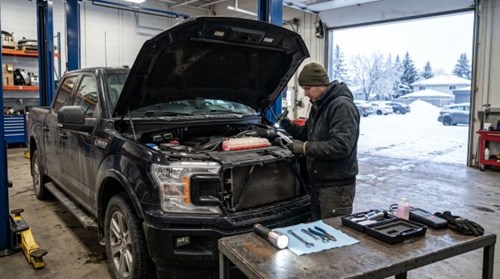

Winter in Edmonton exposes the entire cooling system, not just the radiator, to days and weeks of below-zero temperatures that add stress. In rough weather, your radiator’s metal parts expand and shrink as the engine heats and cools, and such a cycle is more intense when the outside air is freezing. Soldered joints, plastic end tanks, and rubber hoses all encounter increased stress with that repeated hot-cold swing. A second-hand radiator that worked perfectly well in a temperate climate will leak or warp under the assault of repeated minus 20 degrees Celsius cold starts. Short trips in winter mean the engine might not get fully up to heat, so moisture and sludge can accumulate inside the cores and restrict flow over time.
Any used radiator for an Edmonton car should be inspected carefully for freeze cracks, even if it appears clean initially. Hairline cracks may develop along plastic tanks, near hose necks and around mounting tabs where stress is greatest. These fissures can be difficult to detect. Therefore, it’s beneficial to wash the exterior initially and utilize a powerful light to examine every seam and corner. On aluminum-core units, check for bulging tubes, bent fins near the inlet or indications that the core has bowed from former overpressure. Little coolant stains, dried white or rusted marks, or wet spots near the crimp joints frequently indicate previous expansion damage that is likely to be worsened by the next cold snap.
Antifreeze is more important when you’re using used parts in severe cold. A suitable coolant mix, generally approximately 50% antifreeze and 50% distilled water, prevents freezing down to about −37 °C and protects against internal corrosion. For Edmonton conditions, many owners opt for products rated for even lower temperatures as indicated on the label in °C. Cheap or no-name coolant or just plain water for a top-off can allow ice crystals to form in small passages and cause blockages or micro-cracks in an older radiator.
Winter climate stress factors. Checking coolant level, hose firmness, and visible joints every few weeks can catch slow leaks before they leave you stranded in freezing weather. A simple pressure test at a reputable shop at the beginning and midway point of the season will reveal if the system still holds rated pressure without leakage. Noticing your temperature gauge for weird swings or your heater blowing cooler air than normal can both indicate early clogging or air in the system. These minor inspections take minimal time and assist a used radiator in managing Edmonton’s winter load with fewer surprises.
Alberta recommends checking Alberta winter vehicle preparation, including winter-critical components such as the cooling system, heater, radiator, belts, hoses and antifreeze when preparing a vehicle for winter.
Conclusion
BOTTOM LINE, used radiators Edmonton can be in your best interest if you stay savvy and somewhat selective. Brutal winters take a toll on cooling components, so age, rust, and former leaks count for a lot. A clean core, solid tanks and dry seams outweigh a cheap price on a worn out unit any day.
Good shops in Edmonton understand block heaters, road salt and cold starts. They can match your VIN, inspect hose spots and align fan shrouds so you don’t battle with fit.
For your next step, chat with a local yard or parts store, request clear photos, and run through the checklist from this guide before you drop the cash.
Frequently Asked Questions
Look for clean fins, no visible cracks, and no heavy corrosion. Request pressure testing results and mileage. A reliable dealer will tell you the radiator’s story and provide a warranty or return option.
Make sure it holds pressure, is leak-free, and is the perfect fit for your specific make, model, and engine. Check tanks and seams for freeze damage. Make sure coolant ports match and inquire if it has been winter tested.
Pair the part number with your original radiator or OEM catalog. Verify sizes, hose placement, tranny cooler ports and mounts. If you’re unsure, give your VIN to the seller so they can check exact fitment.
OEM radiators tend to fit better and perform like factory. Good used OEM units can be more dependable than cheap aftermarket bits. A high-quality new aftermarket radiator might be better than a worn OEM unit. Compare make, model, and age.
Keep an eye out for engine overheating, low coolant, visible leaks, rust-colored coolant, or a sweet smell under the hood. P.S. Watch for fluctuating temperature gauge readings or heater not heating well. All of these are indicators that you need to test or replace the radiator soon.
Frigid winters put radiators through temperature whipsaws. Fragile plastic tanks and aging seals can fracture. A bad coolant mix can freeze and crack cores. The right antifreeze mixture, fresh coolant, and a sound radiator can be the difference between a reliable winter drive and a stuck-in-the-mud struggle.
A good used radiator can save a chunk of cash over new. It’s most economical when the unit is pressure tested, appropriately matched to your car, and sold by a high-quality dealer. Always weigh price against condition and warranty.