
-
-
How do I know if my differential needs to be replaced instead of repaired?
-
Are used differentials reliable for daily driving in Edmonton?
-
What should I look for when buying a used differential in Edmonton?
-
Is it cheaper to buy a used differential than to rebuild mine?
-
How long does it take to replace a differential with a used one?
-
Do used differential suppliers in Edmonton offer warranties?
-
Key Takeaways
-
Differentials enable wheels to turn at different speeds while still transmitting power, increasing traction, handling, and safety when cornering on wet, icy, or uneven roads. Routine fluid changes and inspections keep this important drivetrain component working reliably long term.
-
Typical reasons for differential failure are old or low fluid, gear and bearing wear, aggressive driving, heavy towing and harsh conditions like Edmonton’s winters and bumpy roads. By scheduling routine maintenance and using the proper premium gear oil, you can reduce the risk of expensive repairs or breakdowns.
-
Warning signs of a bad differential may come in the form of whining or clunking noises, fluid leaks or burnt smells, vibrations while driving, and resistance or jerking when turning. By being aware of these symptoms and scheduling a professional inspection at the earliest sign of trouble, you save your drivetrain and transmission from additional harm.
-
Repair is generally the smarter choice when issues are minor, parts are accessible and the remainder of the drive train is sound. Replacement is more logical in situations of severe damage or excessive repair costs. Nothing beats a quality used OEM to get you through when full replacement is required!
-
Used differentials represent major cost savings over new units and still come with factory-correct fit and performance if you select OEM parts. They back environmental sustainability through the reuse of components and reducing the requirement for new production.
-
If you’re considering a used differential in Edmonton, be sure to work with a reputable recycler, check the source and mileage, inspect the part, and check for warranty coverage. Trusted local suppliers like Jasper Auto & Truck Parts can offer tested OEM units, rock-solid warranties and quick availability to get vehicles back on the road sooner.
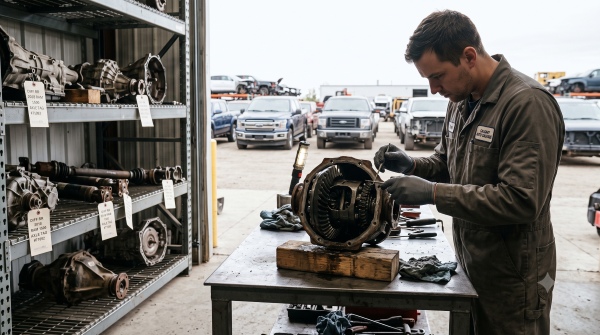
Used differentials Edmonton are drivetrain components that have been taken from older vehicles and resold after being inspected, frequently as a budget alternative to brand-new units. Many buyers use them to repair trashed rear or front axles, fix bills or keep high-mileage trucks running. In Edmonton, used differentials come from auto wreckers, salvage yards and specialty shops that carefully sort, clean and test units before sale. Stock covers most of the common pickup and SUV models, as well as some commercial and 4×4 vehicles. To make a good selection, people examine gear ratio, housing type, mileage and warranty conditions. The following sections talk you through where to locate them, what to inspect, and how to balance price with long-term worth.
What Is A Differential?

Gear-driven unit in the drivetrain that allows the wheels on the same axle to rotate at different speeds while still receiving power from the engine. It’s a big part of how a car turns, how it puts power to the ground, and how safe and predictable it feels in everyday driving. Differentials are positioned on the front, rear, or both axles in cars, SUVs, and trucks and require routine maintenance if you desire extended, hassle-free performance.
1. The Turning Problem
When your car turns, the outside wheel follows a longer path than the inside wheel and therefore has to spin faster. As a rule of thumb, on a flat turn, the outside wheel might be spinning at 110 percent of car speed, with the inside wheel spinning at 90 percent. That speed gap is plain old physics, not a flaw.
If you're unfamiliar with drivetrain components, learning more about how a differential works can help you better understand why it's essential for safe handling and smooth cornering.
Without a differential to accommodate that speed difference, both wheels would be locked together and compelled to rotate at the same speed. Then one tire would have to drag or hop through the turn. That results in bad traction, increased tire wear, and an imprecise, jumpy feel on slick or jagged pavement.
The differential fixes this by allowing each wheel to rotate independently while still distributing power to either side of the axle. This controlled slip between left and right wheels keeps the vehicle planted in corners, on rough terrain and tight parking maneuvers.
2. Power Distribution
It separates engine power left and right across an axle. That way, both sides get useful torque instead of making one wheel do most of the work. This balanced load keeps the vehicle stable under throttle, whether you’re crawling away from a stop or hauling a trailer.
Good torque distribution safeguards the rest of the drivetrain. When torque is distributed properly, gears, bearings, and axles experience less stress and less torsion. Premium gear oil and timely fluid changes come into play here, as the oil is what keeps those gear teeth cushioned and prevents harsh metal-to-metal contact, particularly when the unit is cold or under heavy load.
3. Gear Ratios
Internally, the differential gear ratio is between the ring and the pinion. It describes how many turns of the driveshaft there are to one turn of the wheels. A higher numerical ratio, such as 4.10 to 1, gives stronger acceleration and better pulling power but usually raises engine speed at highway cruising. A lower numerical ratio, like 3.23 to 1, can improve fuel use and reduce noise, but it may feel weaker when towing or climbing hills. Picking the right ratio for a replacement or used differential should match how the vehicle is driven: frequent highway trips, heavy loads, city stop-and-go, or mixed duty. For fast reference, a lot of shops maintain an easy-to-read chart of standard gear ratios by model and engine size so purchasers can weigh their options on the spot.
4. Common Types
All but a few road cars use open diffs, which are uncomplicated and economical but will transmit more power to the wheel with less traction. Limited-slip units add clutches or other internal components to keep some torque flowing to both wheels, which aids traction on wet, snowy or loose surfaces. Locking differentials can mechanically lock both wheels together for maximum traction off-road or in deep mud, while torque-vectoring systems use advanced controls to shift torque side to side for sharper handling. Rear differentials come standard on many trucks and SUVs, front differentials manage power in most front-wheel-drive configurations, and all-wheel-drive rigs might have both as well as a center unit. They’re all intricate assemblies that require genuine craftsmanship to tune. Any gear-driven unit will rumble, particularly with engine torque forced to angle 90 degrees through the axle. Their life span depends on climate, driving style, and care. Freezing weather can thicken differential fluid below about −20 °C, increase wear on cold starts, and hard wheel spin when stuck can strain or break internal gears. Most manufacturers recommend fluid service about every 30,000 to 100,000 km, with shorter intervals for severe winters, heavy towing, or lots of city driving.
Why Differentials Fail
Differentials fail when heat, load, and poor lubrication pile up. In urban or highway use, most units survive around 150,000 to 300,000 km, but severe driving or neglected service can halve that.
-
Insufficient lubrication or old, contaminated fluid
-
Failure to change fluid at 50,000–100,000 km service intervals
-
Aggressive driving, rapid acceleration, and excessive wheel spin
-
Heavy towing, overloading, and frequent hauling
-
Natural wear of gears, bearings, and seals
-
Extreme temperatures and harsh road conditions
-
Ignored warning signs like whining, clunks, or vibration
Ignoring early noise or leaks can quickly transform a small repair into a rebuild or used differential replacement. Periodic inspection and fluid service diminish that risk.
Fluid Issues
Insufficient lubrication is among the leading causes of rear and front differential failure. When fluid is low, old, or contaminated with metal shavings or water, it no longer cools and coats the gear teeth and bearings. Heat accumulates, the gear surfaces pit, and bearings begin to howl, particularly at constant speeds.
Adhering to scheduled differential fluid changes, usually every 50,000 to 100,000 km for city driving, avoids this damage and stops parts from welding themselves together under load. The wrong grade or additive package of gear oil can be just as damaging, causing clutch chatter in limited-slip units or premature wear in hypoid gears.
Any hint of a damp housing, visible drip or spots under the vehicle should spark a check. Repairing a seal and topping off with the right oil is much cheaper than replacing a fried used differential down the road.
Wear And Tear
Even with regular use, gears, bearings, and seals wear out because they exist under continuous load and friction. Why do differentials fail? Over 150,000 to 300,000 kilometers, the microscopic contact points on ring and pinion teeth develop pitting, bearings lose their smooth finish, and seals harden and seep.
High mileage combined with heavy loads accelerates this. A work truck that tows frequently or lugs tooling all week will typically strain its differential more than a light-duty commuter car on smooth paved roads.
Routine inspections for play in pinion, decel noise or seepage around axle seals catch this wear before it breaks teeth or locks the unit. When parts are worn, replacing them with quality used or OEM components, not the cheapest possible, delivers a more stable, longer-lasting repair.
Driver Habits
Your habits behind the wheel directly affect differential longevity. Hard launches, aggressive passing, and repeated rapid acceleration all shove that sudden torque through the gears, which can chip teeth or bruise bearings over time. Too much wheel spin on ice, gravel, or mud, for example, when those wheels suddenly regain traction, loading the gears is a classic failure trigger.
Regular towing or hauling of heavy loads puts even more stress on front and rear differentials, particularly on steep grades or in stop-and-go traffic. The unit runs hotter and any minor lubrication or wear problem manifests sooner.
Smoother driving, earlier upshifts and light throttle application lower shock loads and keep temperatures low. Regular servicing helps counter the effects of the required hard use, like commercial hauling or regular trailer towing.
Edmonton's Climate
Edmonton’s cold winters can drive temperatures far below freezing, causing differential fluid to thicken and circulate sluggishly at start-up. Thick oil flows badly, so gears can run borderline dry in those initial kilometers, increasing wear and noise. In freezing temperatures, any wear or low fluid problems you already have become worse.
Gravel roads, slush and freeze-thaw cycles increase the possibility of outside damage, such as knocked seals or vent problems that draw moisture into the housing. Contaminated fluid — water or fine grit intermingled — destroys the oil film and accelerates internal wear.
In this type of climate, more frequent inspections and earlier fluid changes are usually worth the expense. High-quality lubricants rated for wide temperature swings and designed for the specific axle help the differential stay protected all year.
Spotting A Bad Differential
A bad differential typically doesn’t go out without warning. A lot of these begin as minor problems that are soon overlooked and ultimately escalate into catastrophic drivetrain and even transmission damage. Watching for early signs is one of the best ways to safeguard a used differential, whether your vehicle is in Edmonton traffic or on long highway miles.
Early warning signs to watch for include:
-
Any new whining, humming, grinding, or clunking from the axle region
-
Fluid spots or puddles beneath the center or rear of the car.
-
A burnt oil smell after drives, even at moderate speeds.
-
Vibration in the seat, floor, or steering wheel that was not there before.
-
The vehicle pulling to one side or feeling loose in turns.
-
Tires hopping or skipping when you turn at low speed.
Prompt checks and repair keep uneven wheel speed from generating heat and stressing the pinions and gears. That helps stave off catastrophic failure and keeps the rest of the drivetrain in better condition.
Strange Noises
Noise tends to be the first red flag when something is amiss inside the differential, particularly when bearings wear or components go under-oiled. Any unusual whining, humming, grinding, or clunking sounds from the rear or front axle area require prompt attention, even if intermittent. Lots of drivers detect that the pitch varies with speed or noise worsens on acceleration, deceleration, or turning, which may indicate worn gears, damaged bearings, or low, contaminated fluid. A certain amount of gear noise is expected on any differential, so diagnosis can be tricky, but a persistent new noise that increases in volume as time passes is hardly ‘normal’. A shop that handles used differentials daily can distinguish harmless noise from a genuine issue, and early inspections frequently prevent the gear set from complete breakdown.
|
If you're preparing your vehicle for registration, resale, or compliance requirements, reviewing Alberta vehicle safety inspections can help you understand when drivetrain issues need immediate attention. |
Leaks And Smells
Fluid leaks around the axle tubes or differential housing typically indicate seal or gasket issues. If ignored, they rob the gears and bearings of lubrication.
Search for wet streaks on the housing, glossy oil inside wheels, or black stains on the floor where the vehicle sleeps at night. A burnt, sharp smell post-drive can indicate that differential fluid has either overheated or broken down, most typically because the car was overloaded, driven aggressively, or is using oil that should have been swapped many kilometers ago. Fixing leaks and changing the fluid before it runs low is a lot cheaper than replacing a ring and pinion set that has run hot and worn itself out.
Driving Vibrations
Vibrations you feel through the floor, seat or steering wheel can come from all kinds of places. The differential is one of them.
If bearings are shot, gears chipped or the axle out of line, it can cause a shake that appears at certain speeds or when you are off and on the throttle. This could manifest as a light buzz at 60 km/h that becomes a harsh shudder at 90 km/h. Since vibrations can come from tires, wheels, or driveshaft joints, a professional diagnostic check is worth the visit. It helps nail down if the used differential is to blame or if the culprit is elsewhere in the drivetrain. To turn a blind eye to a developing vibration is to let internal damage propagate and thrust stress into the transmission and driveshaft.
Turning Difficulty
A good differential allows the left and right wheels to rotate at different speeds, so turns are nice, smooth, and intuitive.
When bits begin to go, your vehicle may pull hard to one side, feel loose or unstable mid-corner, or lurch as you navigate a bend. You may observe the inside tire skipping or hopping in tight parking-lot turns, or traction loss that seems incongruous with the road and weather conditions. This might occur when internal clutches stick, gears erode, or unequal wheel speed creates additional heat and wear on the pinions. Normal wear and tear after many years, perhaps 240,000 km (150,000 miles) or so depending on style of driving, and that one hard run, along with the skipped fluid change, all increase the risk. Routine fluid service every 50,000 to 60,000 km and a quick check at the first weird turn feel are crucial for safety and drivetrain longevity.
|
If you're preparing your vehicle for registration, resale, or compliance requirements, reviewing Alberta vehicle safety inspections can help you understand when drivetrain issues need immediate attention. |
Repair Versus Replacement
A worn or noisy differential doesn’t necessarily require a full swap. Repair versus replacement is largely dependent on how terrible the damage is, the unit’s age and mileage, and how the total compares with a good used differential in Edmonton’s market.
Simple repairs such as replacing seals, installing new bearings, or resealing the housing typically cost between $350 and $2,500 CAD, including parts and labor. Labor rates at Canadian repair shops commonly range from $140 to $200 CAD per hour, and repair time can vary from 2 hours for a basic reseal to 10–14 hours for a complete differential teardown and rebuild. When repair estimates begin approaching or exceeding the cost of a quality used OEM differential—typically $2,000 to $5,500 CAD installed, depending on the vehicle—replacement often becomes the more practical and cost-effective solution.
Modern differentials are highly sophisticated components that require precise setup and calibration. Incorrect diagnosis or poor-quality repair work can lead to recurring noise, premature wear, and additional drivetrain problems. If your drivetrain inspection uncovers additional engine-related damage, explore our selection of quality used engines and engine parts to restore reliable performance while keeping repair costs under control.
When comparing repair versus replacement, a thoroughly inspected used OEM differential can provide dependable performance while helping reduce repair costs, especially if the original unit has high mileage or significant internal wear. Edmonton's harsh winters, icy roads, and freezing temperatures place additional stress on drivetrain components by thickening gear oil and increasing wear during cold starts. For that reason, it's important to base your decision on the differential's overall condition—not simply its age—before choosing the best repair option.
When To Repair
-
Noise or vibration begins recently and is still mild. Light humming, faint whine on coast or minor vibration at particular speeds can indicate early bearing wear or fluid problems. If caught early, these sorts of issues are usually managed with a fluid change, bearing replacement or resealing prior to gears being damaged.
-
No metal chunks or heavy debris in the oil. Upon inspection, if the drain plug and differential oil show fine metal dust but no large chips, the gears are usually still good. A shop can clean the housing, replace the bearings and seals, and reset backlash and preload.
-
Housing and gears require a clear visual inspection. If the ring and pinion teeth wear normally, with no cracking or pitting, and the housing is not bent, repair maintains the original match of parts. These repairs maintain factory driveability and save a full unit price.
-
Obviously, total repair is less than replacement. When repair falls well below the cost of a used unit and installation, keeping the original differential is generally more economical. Well-timed work can nudge life near those anticipated limits, for example, 150,000 to 250,000 kilometers for front units and 200,000 to 300,000 for rear.
-
Top-quality or OEM-grade components. OEM or proven used internal parts means no repeat repair risks. As long as you have the correct parts and a good mechanic, repair is usually faster and gets you back on the road sooner than a full change.
When To Replace
-
Severe internal damage is visible or confirmed. Broken or chipped ring and pinion teeth, deep scoring, burnt clutches in limited-slip units, or a cracked housing typically indicate repair is not a smart option. Even if you can salvage some parts, the labor to rebuild can cost more than a whole used differential.
-
Repair quotes near or exceed replacement cost. If the estimate climbs into the $2,000 to $5,500 CAD range, particularly when multiple hard parts such as gears, bearings, and seals need replacing, a quality used OEM differential often delivers better overall value. This is especially true for modern differentials, where precise setup requires additional labor and replacement components can be expensive.
-
Parts are hard to find or discontinued. Older or low-volume models might have part support. When certain gears, carriers, or electronic parts are unavailable or have very long lead times, a complete used differential from a similar vehicle is the solution.
-
High mileage with hard use or Edmonton-style conditions. A differential that’s experienced heavy towing, regular wheel spin on snow and ice, or skipped fluid changes well past the 30,000 to 100,000 km service mark is going to be far less likely to succeed a second time. In such instances, replacing the unit and then staying on top of fluid changes can be a tidier long-term strategy.
-
Require to be reliable with less diagnostic risk. Sourcing the noise in a worn drive line can be tricky. Replacing it with a known good used OEM differential of the same ratio, axle type, and electronic features mitigates that risk as long as the unit is tested and the specs align with the vehicle data plate.
Why Buy A Used Differential?

Why buy a used differential? Buying a used differential in Edmonton slashes repair costs, preserves factory performance and reduces waste, while getting you back on the road sooner.
Cost Savings
Used differentials are one of the most affordable ways to repair a damaged front or rear differential. A brand-new OEM differential can cost between $2,000 and $5,500 CAD or more, depending on the vehicle, making it a significant expense for owners of older cars, SUVs, or work trucks. A quality used or professionally reconditioned differential often costs only a fraction of that while still providing many years of dependable service, especially when sourced from a low-kilometer donor vehicle.
For most owners, used parts are a pragmatic response to high dealer prices. A dealer might exclusively sell a brand-new OEM assembly, but an auto recycler or independent shop can find a matching used OEM differential or a rebuilt one that has had worn components replaced. This can liberate funds for other repairs like brakes, tires or suspension.
It’s one way to compare apples to apples – the full cost, not just the sticker price. Include labor, fluids, seals and potential coding or calibration. In too many cases, the used one still ends up noticeably lower.
|
Vehicle type |
New OEM differential (CAD) |
Used OEM differential (CAD) |
Approx. saving |
|---|---|---|---|
|
Compact passenger car |
2 000–2 700 |
500–900 |
55–75% |
|
Mid‑size SUV / crossover |
2 600–4 000 |
700–1 300 |
50–70% |
|
4×4 pickup / light truck |
2 500–5 500 |
900–1 800 |
50–65% |
OEM Quality
Used OEM differentials were built by the original manufacturer for that exact drivetrain, so the housing, gear ratio, sensors, and mounting points match the vehicle by design. This prevents fitment problems that can arise with certain generic aftermarket units, including noise, leaks, or inappropriate gear ratios that impact fuel consumption and engine rpm.
Why Buy A Used Differential? Because OEM parts are designed for particular loads, towing limits and traction systems, they typically play nicely with current ABS, stability control and all‑wheel‑drive software. A clean, low‑kilometer OEM differential is often a better long‑term bet than a cheap new aftermarket assembly. For vital systems that take power from point A to point B, most technicians recommend buying a used or rebuilt OEM unit instead of a non‑OEM one, if possible.
Environmental Impact
Buying a used diff is recycling too, so that’s nice. Rather than landfilling an entire axle housing, gears, and bearings, the part is given a second life in service, which acts to decelerate the stream of metal and fluid waste. Think about it – when a wrecked truck is scrapped after an accident, a still-perfect differential can go on to power a different truck for tens of thousands of kilometers.
Repurposing major parts decreases the need for new production. Every new differential must be mined, metal refined, cast, machined, shipped and packaged, all of which consumes energy and produces emissions. The more drivers stand behind the auto recycling industry, yards can drain and dispose of fluids safely, sort metals and recycle more assemblies, benefiting local communities and the environment at large. For conscientious owners, selecting a premium used unit is an easy method to reduce impact without modifying their driving style.
Immediate Availability
Used differentials are often already on the shelf in Edmonton yards, which allows for faster repair. Rather than wait days or weeks for a new or rebuilt unit to ship from a far-off warehouse, a shop can source a compatible used OEM assembly the same day in many cases and get the swap going immediately.
Shorter wait times mean less downtime, whether it’s a daily commuter or a work truck that makes its own paycheck. Most recyclers have their stock listed online, so you can see the exact ratio, drivetrain layout and donor vehicle before you turn up or book the job. For local drivers, having several yards and used truck part vendors in the area reduces shipping fees and facilitates warranty or inspections if a problem arises post-installation.
Choosing Used Differentials In Edmonton

Selecting used differentials in Edmonton. Cold winters, icy roads, and stop-and-go traffic can quicken wear on gears, bearings, and seals. While replacing your differential, it's also a good opportunity to inspect related systems and browse our used vehicle electrical parts if worn sensors or electrical components need replacement.
Verify The Source
Begin by verifying that the seller is a licensed, established auto recycler or mechanic shop, rather than a fly-by-night online seller with no permanent address. Experienced yards and shops have standardized dismantling and storage procedures, ensuring used differentials remain clean, drained, and capped.
Find out where the unit originated, what car it was in and why that car was totaled or junked. For instance, a rear differential removed from a low-kilometer SUV that was in a fender bender is a completely different risk than that from a work truck that hauled heavy loads daily.
Trusted sellers provide stock numbers, donor car information, and transparent return or exchange policies in writing. They won’t fight simple inquiries regarding service records, test results, or how long the part was on the shelf.
Untrusted sellers might give you a discount price, but the danger of undisclosed damage, incorrect ratios, or bad storage is increased, resulting in doubled labor expenses and added downtime.
Inspect The Part
A used differential needs to be inspected thoroughly for impact, cracked housings, bent mounts, rust near sealing surfaces, or stripped threads. Edmonton’s freeze-thaw cycles and road salt can accelerate corrosion, so watch for flaking rust or pitting on the casing.
Examine the seals and fluid. Intact seals, no apparent leaks, and fluid that is not burnt, milky, or loaded with metal flakes are fundamental inspections. With the cover off, gears should exhibit a uniform pattern of wear and bearings should rotate freely without back or grinding.
Request inspection notes, pressure or spin tests, or videos if the unit was benched. Past wheel spin on ice or long runs with low oil are common causes. A careful inspection is among the few ways to catch it before installation.
Check The Warranty
Confirm what the warranty actually covers: parts only or parts and limited labor, the distance or time limit, and any conditions such as correct fluid type or professional installation. A solid 3 to 12 month warranty can be a great life preserver when an internal defect rears its ugly head down the road.
Compare warranty terms between Edmonton recyclers. A slightly higher cost with better coverage can be cheaper over time than a no support bargain part. To give you an idea, used differentials can go anywhere from $250 to $4,000 CAD and a second install is not inexpensive.
Jasper Auto & Truck Parts carries used OEM differentials in Edmonton and supports them with strong written warranty options that help counterbalance the inherent risk of any used drivetrain component.
Ask About Mileage
Request the donor vehicle’s odometer or at least a usage estimate. Some front diffs can run around 150,000 to 250,000 miles and rear units 200,000 to 300,000 miles, though harsh winter driving, towing, or bad service can curb that in reality.
In Edmonton’s stop-and-go winter traffic on slick roads, differentials on trucks, AWD cars, and luxury SUVs can experience additional strain from traction control events and abrupt load shifts. This is one of the reasons low-mileage, well-documented units are often worth the premium.
Always ask for mileage proof from insurance or dismantler paperwork if possible, and favor differentials with a transparent history and professional testing. Rebuilt or refurbished differentials make sense, as a front differential rebuild can cost roughly 900 to 2,200 CAD if you own a higher-end truck or SUV with costly, specialized parts.
Conclusion
Used differentials Edmonton You combat cold, ice, and rough roads, so components get whacked. A flawless used unit can reduce expenses, reduce wait time, and still keep your vehicle secure on the road.
Key thing is fit and proof. Find your gear ratio, axle type and trim. Request information on mileage, service records and return policies. Look for leaks, rust and unusual wear. A good shop won’t hide that!
For next steps, talk with a local driveline shop, get a straight quote on both used and new, then pick what lines up with your budget and how long you plan to keep the car.
If your vehicle also needs cosmetic or collision repairs, our inventory of quality used automotive body parts can help you complete the job while saving money on OEM replacements.
Frequently Asked Questions
How do I know if my differential needs to be replaced instead of repaired?
If the gears are badly worn, the housing is cracked or there’s severe metal contamination, replacement is usually better. A trusted mechanic can check noise, leaks and play in the axle to verify if a used replacement differential is the more secure choice.
Are used differentials reliable for daily driving in Edmonton?
Yes, if they’re inspected, low‑mileage and from a trusted supplier. Good used differentials Edmonton are inspected for wear, leaks, and damage. When properly installed and serviced with fresh gear oil, they can last many years right here in Edmonton’s driving environment.
What should I look for when buying a used differential in Edmonton?
Pair it with the exact year, make, model, gear ratio and type of your drivetrain. Request mileage, inspection reports and any warranty coverage. Select a Edmonton retailer with great reviews, transparent return policies and expertise in finding differentials for your vehicle and driving requirements.
Is it cheaper to buy a used differential than to rebuild mine?
For the most part, yes. A good used differential usually runs a lot less in parts and labor than a rebuild. Rebuilding requires accurate setup, specialized tools, and a number of new parts. Used units can cut downtime and overall expense if obtained from a quality Edmonton retailer.
Will a used differential affect my vehicle’s safety?
A properly matched and installed used differential isn’t supposed to compromise safety. The secret is professional inspection and installation, the right gear ratio, and proper lubrication. Join forces with a trusted differential pro who test drives parts and backs them with a warranty for peace of mind.
How long does it take to replace a differential with a used one?
Most differential replacements are a couple of hours to a full day, depending on the vehicle design and rust or damage. With the right used differential in stock Edmonton, with seals and fluids waiting, we keep downtime to an absolute minimum.
Do used differential suppliers in Edmonton offer warranties?
Most reputable dealers will provide a limited warranty on used differentials covering a certain mileage or timeframe. Request written terms, what is covered, and installation requirements. A transparent warranty policy is a powerful indicator of a reputable used differentials Edmonton dealer.